Wednesday, November 07, 2012

President of The World!

It is an old story that, after Reagan's successful splitting of the USSR, the US of America became the sole super-power in the world politics. China, India, Germany, et al will still take some more time to catch up before they can really get into the race for supremacy. Until that happens, the USA will continue claiming that they are the leader of all and keep behaving like a guardian to the world. Whenever there's a threat on democracy, they have intervened. Wherever there's any human rights violation, they have sent their troops and took care of the oppressor. All the rouge dictators are being eliminated one by one, sometimes by directly sending troops, and sometimes by invoking 'revolutions' within the country. They are 'allowed' to send helicopters to another country and arrest its incumbent President and bring him to the USA for a trial. Or, if they wish, they may impose a capital punishment on an accused without any trial barging into the sovereign territory of another country unannounced. As the World Leader, the USA hosts the UN Headquarters, and therefore they can refuse entry to any leader of another country wanting to join a UN session.

The above practices may sound unbelievably atrocious to you, but believe me, all these activities have been widely hailed all over the world. The world applauds at these heroic acts of the USA when they are shown on the 'trusted' media like CNN. We justify every step of America with a blind belief that they must be doing it for the 'greater good'.

As the Chief Executive and as the Commander-in Chief, President of the US of A is the most powerful person in the world. His one decision can make or break a nation, can create havoc that can last decades and generations, even can change how the mankind perceive.

Such an important person must be chosen by the entire world, not just by the 169 million voters of whom roughly 60% turn out to exercise their franchise. A  mere 100 million people cannot and must not choose the leader of 700 billion people! This is too risky, too undemocratic! If the USA believes it is the leader of the world, it should let the world choose its President.

I appreciate the efforts of the US Embassies and other agencies around the world who organize mock elections on the Election Day. I participated in the 2008 and 2012 ones and 'voted' for the presidential candidate of my choice. How about taking these mock votes into account when electing the top-brass? The world must be allowed to elect its leader! That'll be the true democracy!


Tuesday, November 06, 2012

I wrote this just after the 2008 US Presidential Election:

Choosing Obama 

by Syed Almas Kabir on Tuesday, November 4, 2008 at 1:11pm

I'm amused to notice the excitement over electing a young, dynamic, and a 'true minority' President of the USA. Down here, we're somewhat 'sad' for loosing an excuse to ridicule the Americans over the antics of their current nitwit Commander-in-Chief. Frankly, I can't figure out why people are all excited about Obama being the Prez. To us, B'Deshis, it really doesn't matter! Neither will give a rat's ass to what happens in this geographically small country of ours. I guess, we're just happy about the fact that a minority is being elected (as if he represents our community), and of course, because someone from the opponent party of Bush is being elected. In that case, Obama should be thankful to Bush and his rogue policies to make the choice easier. I honestly don't think Obama would stand a chance (given he's black) if his predecessor was not hated as much. This shows the degree of unpopularity of GWB, as how much the conservative Americans are compelled to choose a black man to lead them. Obama should also be thankful to Sarah Palin, because of whom it was even easier for people to decide on their candidate. Though I too am awed with Obama's charisma, I'm a little sad for missing the chance of boasting that the father of a Bangladeshi girl is the President of the United States of America.  


COMMENTS:

Ruhsan Rahman: Quite interesting sir! But keeping in view that the whole world revolves around the 'US of A', the president of that country is responsible for the whole world's fate. Just because of that fact, i think Obama brings in an international 'face' and NOT a typical 'red-neck' attitude of the other guy! Hence, we're all loving the fact that a non-white guy can actually rule the world, not only US!! Do you agree?
November 5, 2008 at 2:01am

Syed Almas Kabir: 100%! I'm happy too that Obama has won. But, all I was trying to say was when it comes to Bangladesh, attitude of any American president would be more or less the same! BTW, I congratulate Bush & Palin for their immense contribution toward taking the Americans out of the race discrimination and making history by electing a non-white person as their Commander-in Chief!! I also appeal to President-Elect Obama to remember the support & fan-frenzy that was shown by the Bangladeshis from the opposite side of the globe while making policies (read fate) for the south-east Asia.
November 5, 2008 at 12:12pm

Thursday, April 12, 2012

'Pahela' Boishakh or 'Prathama' Boishakh?

'Pahela Boishakh' (or, 'Poila Boishakh') has been curved in our hearts. So I'm taking quite a risk to write this note!

I believe, the words 'pahela', 'dosra', 'thesra', etc. have been borrowed from Pharsi/Urdu. The correct Bangla words for these are 'prathama', 'dwitiya', 'tritiya', etc. The names of the months of Bangla calendar 'Bangabda' are based on the names of the নক্ষত্র (lunar mansions) - locations of the moon with respect to particular stars during the lunar cycle. These names were derived from 'Shakabda', another calendar of this region that was introduced during the Shaka Dynasty. The dates of these months were referred to as 'prathama', 'dwitiya', 'tritiya', 'chaturthi', 'panchami', 'shashthhi', 'saptami', 'ashtami', 'nabami', dashami', etc.

I believe, when the Emperor Akbar revised the Bengali calendar to synchronize it with the Hijri, the Pharsi/Urdu terms 'pahela', 'dosra' etc. came along.

It is very surprising that, both 'Ekushey February' and 'Pahela Boishakh', the two very important events of the Bangalis, are referred to by non-Bangla words! While Ekushey should be referred to as 'Aat-i Phalgun' , the first day of Boishakh should be 'Prathama Boishakh'. Though the adaptation of the foreign word 'Pahela' as 'Poila' has minimized the linguistic sin, it wasn't really necessary as Bangla already had a perfectly good corresponding word. It is not like 'Akademi' which is used in West Bengal as Calcutta University adapted the English word into the language, much like 'haspatal' for 'hospital', because there were no suitable corresponding words.

Anyways, I hope I have not poured cold water onto the high spirit of the Bangla New Year. Shubha Nababarsha to you all, and have a Shubha Prathama Boishakh!!


Monday, May 23, 2011

Saturday, December 04, 2010


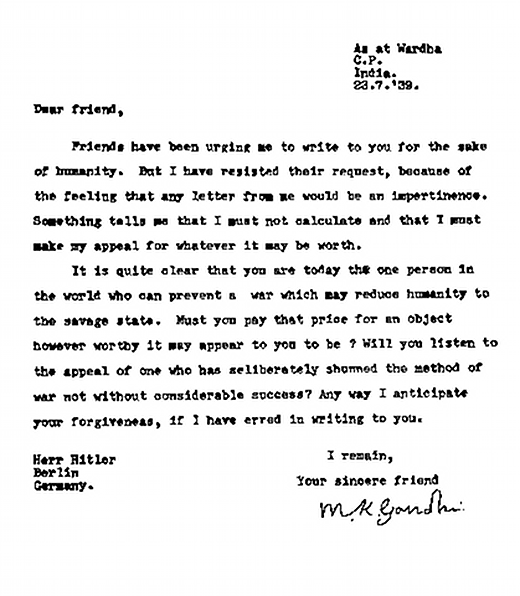
Gandhi wrote to Hitler for the sake of humanity. The letter did not reach Hitler because of intervention of the British government. It's a rare document, and so though of sharing it in the blog.

Monday, October 04, 2010

Children @Cyberspace

Information and Communication Technologies (ICT) have created a new space in which children can both learn and play. It is a space of both opportunity and threat where they can develop, but where they also may become victims of crime or get entangled in illegal and immoral behaviour. Cyber-crime is an extension of conventional criminal activity, which capitalizes on the virtual operating environment. The fact that cyber-crimes are beginning to evolve is not surprising in light of the ever-increasing Internet usage. ICT makes it possible for the wrongdoers to target children individually or collectively. Possible motives include personal gratification of the offender, often by way of sexual exploitation, making money, or alluring children to gain access to emails or web sites from which viruses may be launched or the security of the child's computer may be compromised. Children are particularly vulnerable to exploitation via ICT because the medium is attractive, and they often use the Internet unsupervised and increasingly have access to portable devices with the capacity for data storage, digital photography and communications such as mobile phones. Electronic communications allow offenders to exploit the curiosity and interests of children for a number of purposes. Sexual exploitation may commence using seemingly innocent facilities such as Internet chat-rooms. Initial contact may be part of 'grooming' the child, whereby the child begins to trust the perpetrator and is desensitized to sexually explicit material including child pornography. Possible motives for grooming a child are: to engage in cyber sex, to distribute pornographic material to the child, or to persuade the child to submit pornographic images of themselves online. In some cases, grooming leads to a physical meeting in which the perpetrator sexually assaults the child. There are many ways that are used to redirect children who are online to pornographic sites. One is to send unsolicited email that contains images or links to images. 'Page-jacking' occurs when a normal search is diverted to a pornographic web site. An offender may deliberately set up web domains using common misspellings of sites popular among children to divert them to pornographic sites. Another method used is to manipulate the metadata associated with a site to allow it to be falsely indexed. Once a suspect site has been entered by a child, they may be subject to trapping where they cannot back out from that site and instead are referred back to the same site or other (usually pornographic) sites. Pop-up advertisements may also appear on screen to encourage traffic to pornographic sites. Peer-to-peer exchanges may also occur, especially in online chat-rooms. ICT can also make criminal exploitation of children possible without the child being directly involved. For example, it may be used to facilitate access, storage, trade or possession of pornography, to support information sharing among pedophile networks, and to assist with the organization of illegal activities such as child prostitution. Such activities can be done in relative secrecy. The issue of crime prevention is vital for the simple reason that holding back the reach of the Internet is futile, particularly in light of technological advancements. In addition, it is well accepted world over that law enforcement agencies or governments through the enactment of legislation cannot fully prevent any type of crime in isolation from the community. Equipping the community with effective crime prevention strategies designed to meet these new challenges is a priority. Filter software can be used to ensure that personal information such as name, contact details and credit card numbers are not released over the Internet. Essentially, filters work with the web-browser to either block selected sites, pages above a predetermined rating, or those containing certain language deemed explicit (referred to as blacklisting, white-listing and neutral labeling). A number of the programs rely on rating systems and therefore, parental setting of parameters is required. Filter software are widely available in the market. Some websites that provide useful crime prevention information for parents include:
  • Cyber Patrol (http://www.cyberpatrol.com/)
  • Net Nanny (http://www.netnanny.com/)
  • Bess (http://www.bess.com/)
  • CYBERsitter (http://www.solidoak.com/)
  • Internet Watchdog (http://www.charlesriver.com/titles/watchdog.html)
  • KinderGuard (http://www.intergo.com/wow/kguard.htm)
  • SurfWatch (http://www.surfwatch.com/)
  • Time's Up! (http://www.timesup.com/)
Users should examine different filtering programs to determine the most appropriate depending on their needs. There are a number of concerns with filtering software though. For example, the filters may block access to various health-related sites which communicate safe sex information, or alternatively provide details about the latest techniques in detecting breast cancer. In addition, the dynamic nature and the rapid expansion of the Internet preclude any comprehensive filtering of sites. The technical leapfrog, which is played out on a daily basis between law enforcement agencies and the typically more technically superior cyber-criminals, illustrates the difficulties associated with relying on technical solutions. The following simple guidelines can help make the Internet a safer experience for young children with or without any technical policing. • Placing your computer in an open room with the monitor facing out. This allows you to see and control what is occurring on the Internet. • Educating your children about the Internet, both the positives and the potential dangers. • Bookmarking child-friendly web sites. This allows your children to easily get to safe sites that they have used before. • Teaching your children that Internet safety means never giving out personal information over the Internet. • Sharing your Internet child safety experiences, both good and bad, with others. • Teaching your children to refrain from chat rooms. • Never allow your children to meet with someone from an online session unless the parent approves. • Knowing the parents of your children's friends. • Teaching children to never open email from someone they don't know. • Never responding to an ‘unsubscribe option’ in a pornographic email. If you or your child receives a message that is harassing, of a sexual nature, or threatening, forward a copy of the message to your ISP and ask for assistance. Never before has our society experienced a medium which facilitates global communication and information exchange by convergence of telecommunication and computer technology which we refer to as the Internet. The law enforcement agency is faced with a medium which is both a friend and a foe. Traditionally, crimes such as pedophilia have been completely hidden from societal view. However, increased public awareness can provide law enforcement agencies with an opportunity to make inroads into a range of such criminal activities. As we march towards Digital Bangladesh, we must make everyone aware of the pitfalls and dangers to be encountered en route. As a stakeholder of the society, one must acknowledge the risks and take all necessary steps to stay on guard.